Making an application for planning permission may seem daunting, particularly on the first occasion. No matter what you are planning to do with your property, be it an extension, conversion, or a new building, how you prepare your property before the presentation of an application can really matter. An application that has been prepared will pass through the process with ease, with minimal delays and queries from the local authority.
Cooperating with proficient experts such as HB Planning Services may also help you avoid common pitfalls and present your proposal in the most favorable light.
What are the Requires Planning Permission?
It is worth checking whether your project requires planning permission before making any changes. Other smaller developments are classified as permitted development rights; that is, you are not required to go through an approval process.
But much of the work, particularly larger extensions or alterations that will change the look of your property, will require planning permission. Looking at this early on will save you a lot of time on unnecessary tasks and ensure you use the right process from the start.
Review Local Planning Policies
Each local council has planning policies and guidelines. Such regulations impact what will most probably be passed and what can be rejected.
Get to know:
- Design requirements: In your area.
- Limitations of size, height, and materials.
- Rules on conservation area or listed building.
By aligning your plans to such policies, you are likely to get approval.
Assess Your Property’s Current Condition
Do examinations on your property before making an application. This incorporates the building and the surrounding space.
Consider:
- Condition of the building.
- Access points and boundary.
- Close structures and the impact of these structures on your project.
Knowing your property well will enable you to plan realistically and eliminate problems in the future.
Think About Neighbors and Surroundings
Planning decisions are not only based on your property; they also take into consideration the effects on your neighboring houses.
Common concerns include:
- Loss of light
- Privacy issues
- Noise or disruption
By tackling these points as early as possible and creating your project with these factors in mind, you will avoid objections and make your application more acceptable.
Prepare Accurate Drawings and Plans
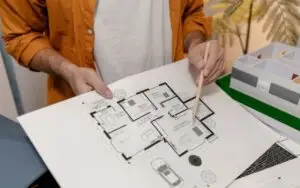
A set of drawings that you submit is one of the most important components of a planning application. These should be able to present your proposal.
Typical drawings include:
- Floor plans (actual and suggested).
- Elevations (front, side, and rear)
- Site layout plans
Accuracy is key. Poor-quality or vague drawings may slow down your application or result in rejection.
Gather Supporting Documents
You might be required to provide additional supporting information for your project, depending on the project.
This could include:
- Design and access statements.
- Heritage statements (of older properties)
- Drainage reports or environmental reports.
Providing all required documents before submission will help eliminate unwarranted delays.
Consider Access and Parking
Local authorities are usually keen on the project’s impacts on access and parking.
Think about:
- Do your plans decrease the amount of parking space available?
- The way cars will enter the property.
- Pedestrians and road users: Safety.
If your proposal poses difficulties in these directions, you may need to modify your design.
Plan for Drainage and Utilities
Any modifications to your property may have an impact on the drainage system, water supply, and other utilities.
Before applying, consider:
- Drainage systems to be updated or not.
- The manner in which rainwater is going to be treated.
- Effects on the existing utility connections.
These practical details will help you address the needs of your proposal and demonstrate that it is well considered.
Speak to Professionals Early
Planning permission entails technical aspects that may not be easily handled on your own. Avoiding stress is possible by obtaining advice at an earlier stage.
Experts such as HB Planning Services can:
- Review your plans
- Identify potential issues
- Assist in getting a powerful application.
Their experience can help the process be less predictable and easier.
Check for Restrictions or Special Designations
Other restrictions may be added to the properties, like:
- Location in a conservation area.
- Being a listed building.
- Being adjacent to secured land.
If your property falls into one of the following categories, additional approvals or documentation may be required.
Prepare for the Application Process
Having all the necessary documents prepared, the application is made by hand by giving the forms, drawings, and other documents to your local council.
Before submitting:
- Check out all the details.
- Make sure that documents are complete.
- Check out your plans.
With a fully prepared application, the risk of delays is minimal.
Be Ready for Feedback or Changes
Although the council is well prepared, they might ask the council to make changes or to provide more information.
This is natural and is a natural process. The flexibility and responsiveness can help speed up your application.
Final Thoughts
Getting your property ready to submit a planning permission application is more than a paperwork-intensive process; it involves preparing a good, well-thought-out proposal that meets your requirements and those of the local planning regulations.
The first step in approaching the process is to understand your property, its surroundings, and to employ experienced professionals such as HB Planning Services.
Proper preparation does not mean approval, but it means you have the best chance possible of being approved and, in the process, minimizes the time and stress incurred.
FAQs
-
Do I have to have planning permission when I carry out improvements on my home?
No, there are smaller development projects permitted under development rights, but larger projects are typically permitted.
-
What is the length of the planning process?
The average time is a few weeks; however, it may take longer, depending on the complexity of the application.
-
What will be the case if my application is rejected?
You can probably make amendments and re-file your plans or take an appeal.
-
Does my application have to be objected to by the neighbors?
Yes, neighbors may raise issues, which will be taken into account in the decision-making process.
-
Do you need any professional assistance with planning permission?
Although not necessary, working with specialists can increase your chances of approval and simplify the process.